
This national study tells you a little about what’s happening on the central Oregon coast.A study just this spring by the Agora Center at the University of Oregon’s School of Journalism backed up this trend when it came to local
Topic: Information Needs Assessment

A Collection of Important News Following Memorial Day Weekend from State Rep David Gomberg
How do you get local news and information? How are those sources changing? And do you trust the information you find? Those were the questions posed in a recent academic report titled Lincoln County Information Assessment Report: Understanding Local News and
UO study: News and information systems in Lincoln County are fragmented, uneven and “under strain”
Local news and information systems in Lincoln County are fragmented, access is uneven and depends on geography, language and familiarity with public institutions, according to a study by a University of Oregon journalism professor and his students.
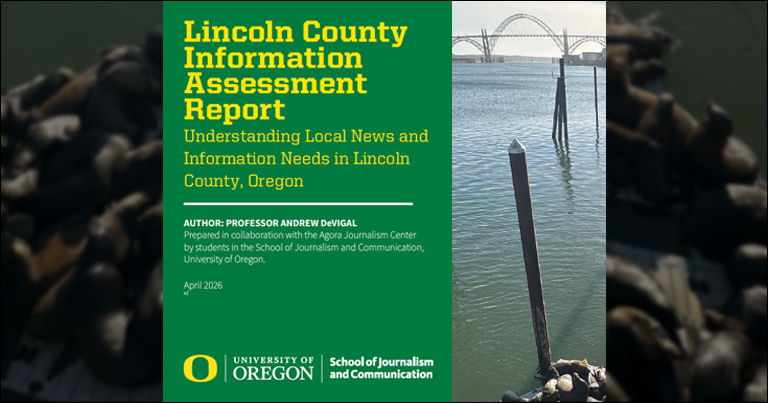
Community Perspectives on Lincoln County’s Information Ecosystem (2026)
The project, conducted by UO students in partnership with local media, civic organizations, and tribal partners, included a co-designed survey with 787 validated responses and two public listening sessions held in Newport and Lincoln City.
Listening to Oregon: Understanding Our Communities’ Information Needs
How Oregonians Get, and Share, News & Information Since 2018, the Agora Journalism Center and students from the University of Oregon’s School of Journalism and Communication have partnered with communities across the state to understand how residents access, trust, and
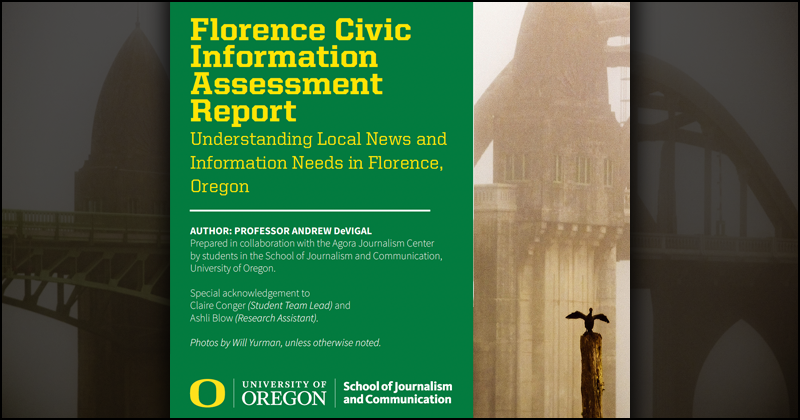
Community Perspectives on Florence’s Information Ecosystem (2025)
With a population that skews older and a patchwork of information channels—ranging from Facebook groups to library bulletin boards—Florence faces the challenge of keeping residents informed without a single, consistent hub. The project, conducted by University of Oregon students, included a co-designed survey with 106 responses, a well-attended listening session, and weekly planning meetings with community partners.
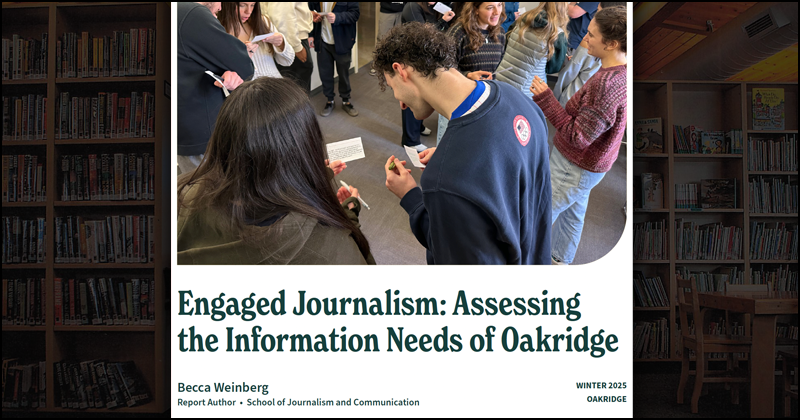
Community Perspectives on Oakridge’s Information Ecosystem (2025)
The closure of the Dead Mountain Echo in 2020 and limited capacity of the Highway 58 Herald have left Oakridge relying heavily on Facebook, word of mouth, and bulletin boards. While residents expressed deep pride in their community, they voiced frustration over fragmented, biased, or outdated information.
How do you find out what you want to know about your community?
University of Oregon researchers are surveying local area residents about how they find out — and would like to find out — about local news
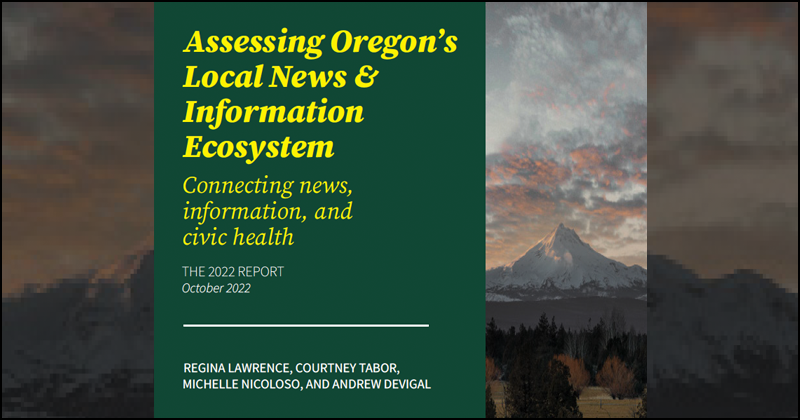
Assessing Oregon’s Local News & Information Ecosystem 2022
This report represents one step toward assessing the state of local news in Oregon and what can be done to strengthen it. Counting and mapping Oregon’s local news producers will track further changes. And by looking at initiatives underway around the country, Oregon’s newsrooms, educators, funders, and policy-makers can consider emerging innovations to build the vitality of Oregon’s local news that mean communities’ information needs.
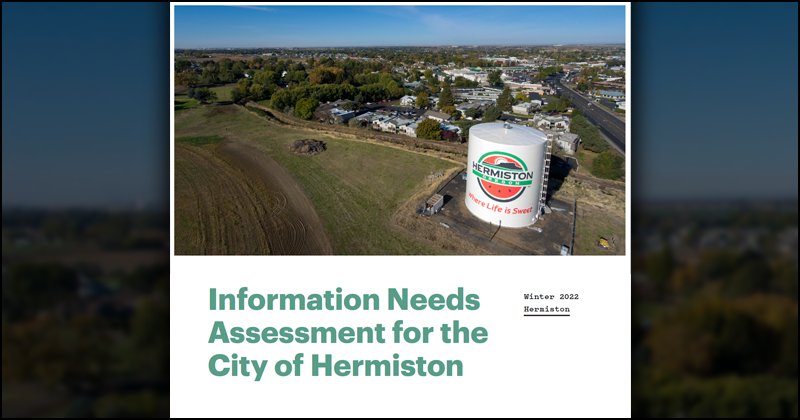
Community Perspectives on Hermiston’s Information Ecosystem (2022)
Through surveys, site visits, and facilitated conversations, students explored how residents get and share local news, what sources they trust, and where information gaps exist. Overall, residents rated themselves as fairly well informed. Facebook—especially the “What’s Happening in Hermiston” and “NEW What’s Happening in Hermiston” groups—was the most frequently used source for local updates, though trust in it was mixed.